Sea Trout Flies for Day and Night Fly Fishing
This website will focus on sea trout flies, both traditional and modern, as used for sea trout day and night fly fishing primarily on British rivers and lochs, featuring examples of traditional Scottish sea-trout loch fly patterns and some of the famous flies popular over the years on sea trout and sewin rivers throughout the UK, together with modern developments in seatrout fly and lure design, particularly for night fishing; the growth in the popularity of the tube fly, with particular reference to the background and development of Gray’s Needle Tubes and Needle Tube Flies specifically designed with night sea trout fly fishing in mind.
Early Sea Trout Fly Fishing
Throughout the last century, sea trout fishing was practised on rivers and lochs in the UK and Ireland, on the once famous sea trout lochs of the north west highlands of Scotland, on the great western Irish loughs and on rivers up and down the country, from Sutherland to Cornwall; on the Scottish Islands, on the lochs of Lewis, Harris and the Uists and in the coastal waters of Orkney and Shetland. Fly fishing was the most popular method, drift fishing on the lochs using traditional sea trout flies or dapping with the long rod in a good wind. With the exception of some areas, for example in Wales, where the primary game angling species was the sea trout or sewin, sea trout catches on our rivers were largely incidental to salmon fishing. Night river fishing was a relatively minor aspect of the sport, or at least less well publicised than the daytime fishing. Although early writers such as Jeffery Bluett (Sea Trout and Occasional Salmon, 1948) wrote enthusiastically about sea trout night fishing – in Bluett’s case on Devon’s River Tavy – such nocturnal goings on were generally considered inferior to proper daytime sport. The turning point for many was the publication of “Sea Trout Fishing” by Hugh Falkus in 1962, which inspired a generation to explore the exciting possibilities of night sea trout fly fishing on our salmon and sea trout rivers. That book, together with the later revised and enlarged editions, is still widely regarded as the sea trout fisher’s bible, a must read for those in the grip of the glorious obsession that is night sea trout fishing.
Traditional Scottish Sea Trout Flies
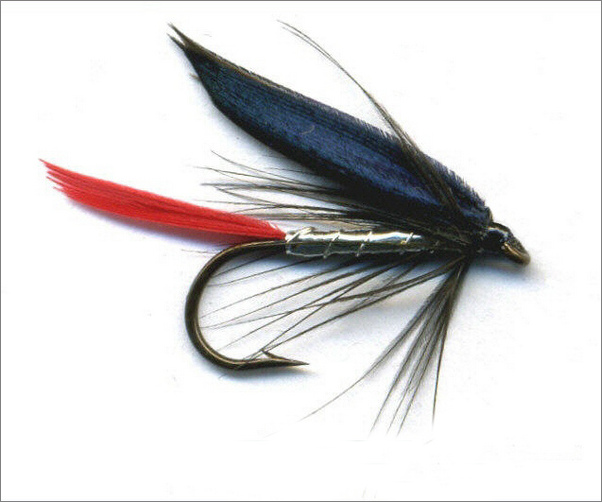
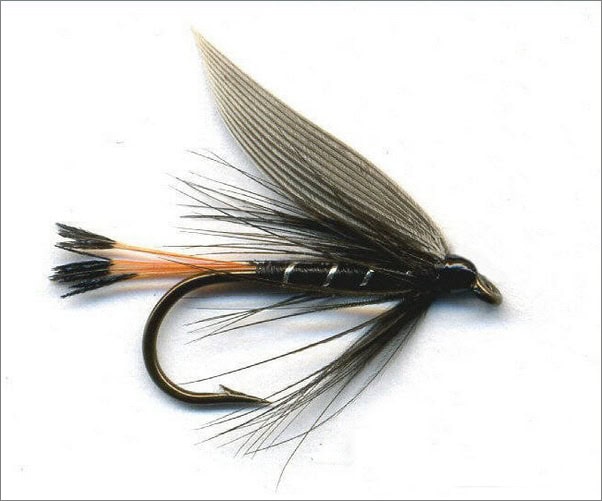
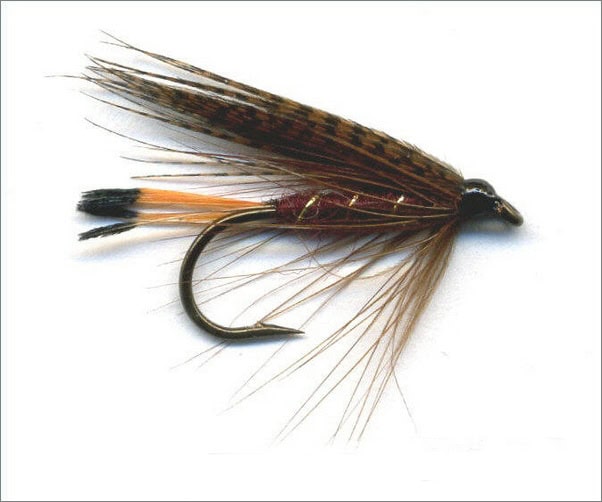
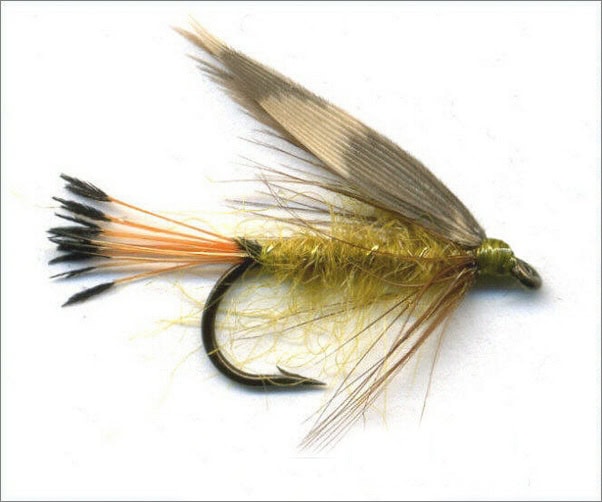
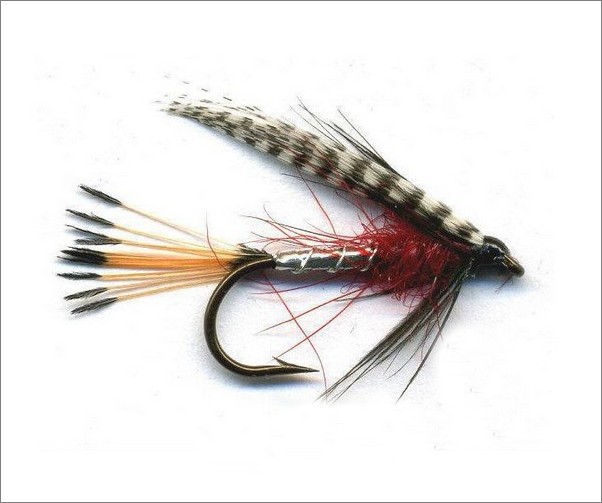
Flies for sea trout fishing on the lochs were, for the most part, large versions of trout flies, usually in sizes ten and eight, and very effective they were. R. C. Bridgett, writing in “Sea Trout Fishing“, 1929, based on opinion gathered from sea trout fishers the length and breadth of Scotland, listed the ten most popular Scottish sea trout flies as follows: Butcher, Peter Ross, Teal & Silver, Dunkeld, Mallard & Claret, Silver Doctor, Grouse & Claret, Pheasant & Yellow, Blae & Blue and Blae & Black. These same flies were often used by those fishing for sea trout on rivers, by day or night. Indeed, few of today’s sea trout fishers would feel unduly deprived if limited to the above sea trout fly selection, perhaps with the addition, for river night fishing, of a few longer lures, dressed on tubes or wire shanks, for late in the night.
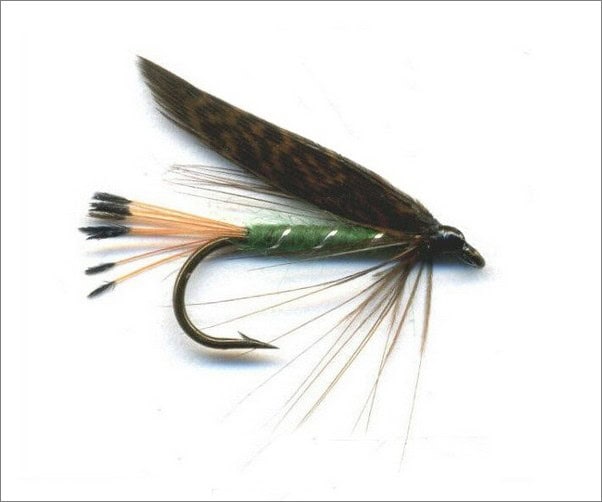
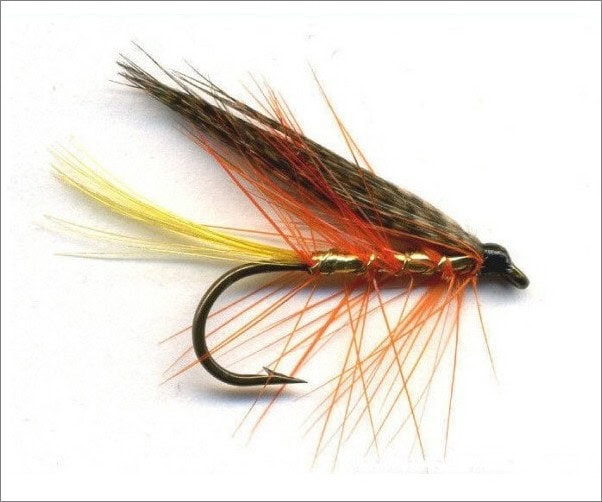
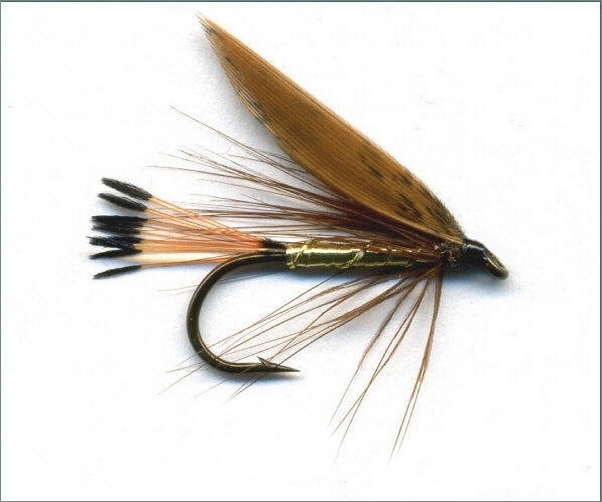
Sea Trout Fly History
A brief historical background to just a few of our popular traditional sea trout flies
Butcher
In the view of R. C. Bridgett, “The most deadly loch fly ever invented, dressed with split wings well laid back, used on the bob and made to trip across the waves, it is an exceedingly reliable fly on every loch that I have fished. If winged in the ordinary way it is quite a good tail fly and used by many in this position with considerable effect”. Said to have been created in the early nineteenth century by Messrs Jewhurst and Moon, who were butchers to trade. It was originally known as Moon’s Fly, but was renamed “Butcher”, after its creators rather than for its killing properties on the loch.
Bloody Butcher
As stated above, the Butcher was believed to have been created by Messrs Jewhurst and Moon, of Tubridge Wells, Kent in the early nineteenth century. The Butcher or Silver Butcher has, along with its near relatives Bloody Butcher and Kinfisher Butcher, been catching trout and sea trout ever since. This pattern (Bloody Butcher), with more red than the standard Butcher, is considered indispensable by many sea trout fishers. It has become a sea trout classic.
Blae & Black
A very old Scottish loch fly, its beginnings unclear, the Blae and Black is likely taken by the trout for a hatching midge. It is at its best fished early in the season as a dropper on a cast of three or four.
Mallard & Claret
Generally attributed to William Murdoch, a celebrated Aberdeen fisherman, the Mallard and Claret is probably the oldest of the Mallard series of flies. In the words of no less an authority than Courtney Williams, writing in 1948, “For a general fly for any month of the year in fast rivers, for lake fishing or for sea trout, there can be few more universally popular flies. For sea trout, the Mallard and Claret is probably the most popular of all wet patterns, whether fished in the day or after dark.”
Woodcock & Yellow
Probably the best of the Woodcock series of trout flies. Like the Pheasant and Yellow, the Woodcock and Yellow has a fine reputation among Scottish sea trout fishers.
Peter Ross
Dating from the turn of the century and adapted from the teal and red by Peter Ross of Killin on Loch Tay, the Peter Ross is one of the most popular loch flies ever devised. A good tail fly. Also an extremely popular and effective sea trout fly on loch and river.
Grouse & Green
One of the best of the series of grouse winged flies. A good imitation of a caddis or sedge fly.
Black Pennell
Devised in the nineteenth century by H. Cholmondeley Pennell, the Black Pennell is particularly popular in the remoter waters of the Highlands. Commonly fished as a bob fly, it is especially good early in the fishing season when black midges are hatching. Effective, too, for loch and river sea trout.
Dunkeld
A simplified version of the Dunkeld salmon fly, this is a good attractor pattern on both highland and lowland lochs. One of the great loch flies, fished on the tail of a cast as a small fish imitator, it is also highly regarded as a sea trout fly.
Cinnamon & Gold
Probably deriving from the age old Cinnamon Fly, it is particularly good fished in smaller sizes on the tail of a wet fly cast.
Pheasant & Yellow
In his book “Sea Trout Fishing”, 1929, R.C. Bridgett, having gathered opinions from sea trout fishers the length and breadth of Scotland, compiled the following list of the ten most popular Scottish sea trout flies: Butcher, Peter Ross, Teal and Silver, Dunkeld, Mallard & Claret, Silver Doctor, Grouse & Claret, Pheasant & Yellow, Blae & Blue, Blae & Black. Even today, few sea trout fishers would feel deprived if restricted to these ten flies.
Alexandra
Introduced, under its old name, “Lady of the Lake”, around 1860, the Alexandra was later re-named in honour of Princess Alexandra. Some doubt remains over its creator. Some say W.G. Turle of Newton Stacey, Stockbridge. Others, that it was devised by Dr John Brunton, a well-known member of the Gresham Fishing Society and inventor of Brunton’s Fancy. So successful a fly was it that it is reputed to have been banned on some waters. Still a favourite with many sea trout men.
Dark Mackerel
The Dark Mackerel was first introduced, as a sea trout fly, by Messrs John Dickson, of Frederick Street, Edinburgh, dressed on Martin outpoint hooks in sizes 8 and 6. It is a most useful fly, both at night and, in the daytime, for slightly dark, peaty waters. It also serves as a useful bob fly on the loch. A good all rounder.
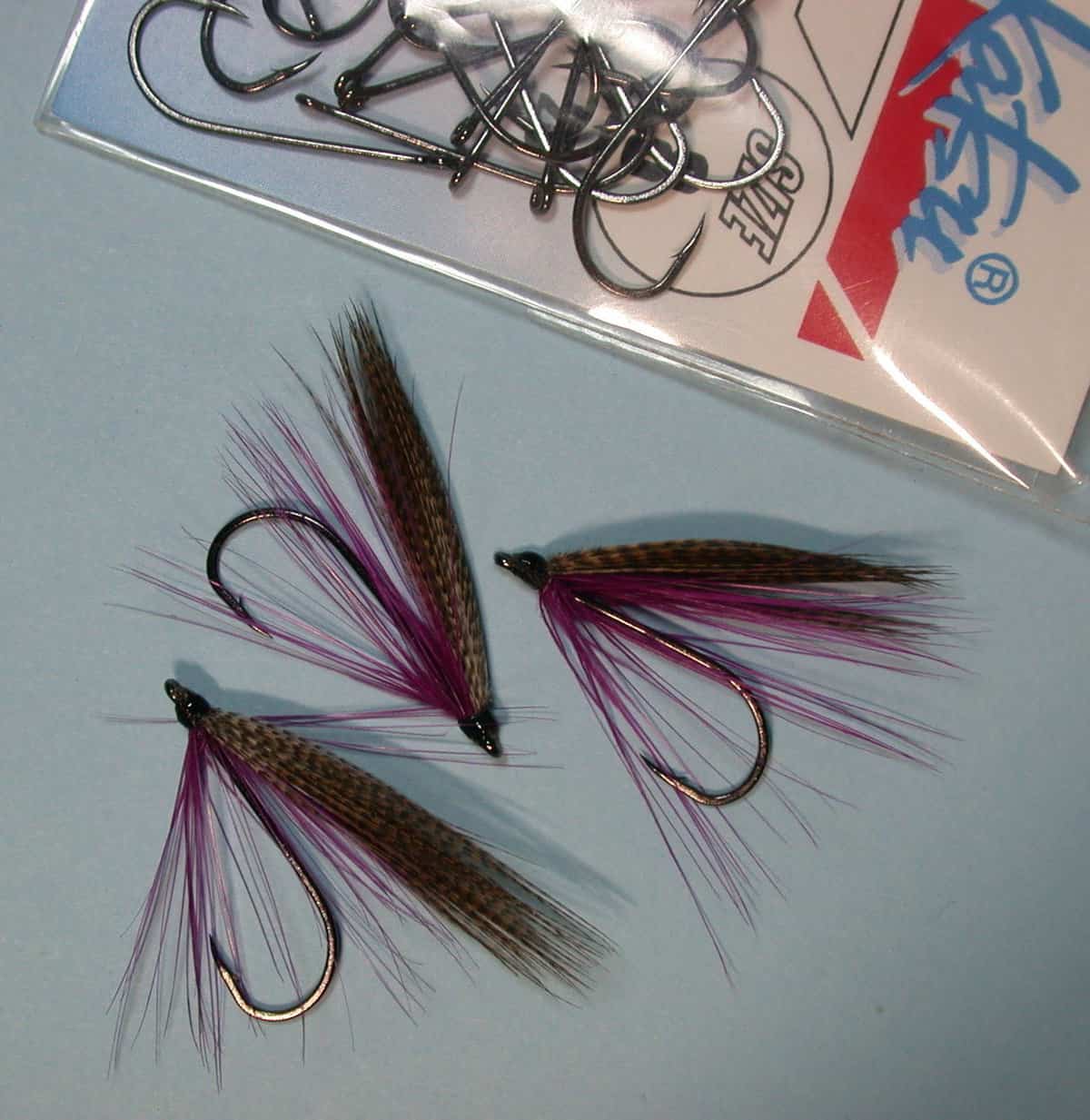
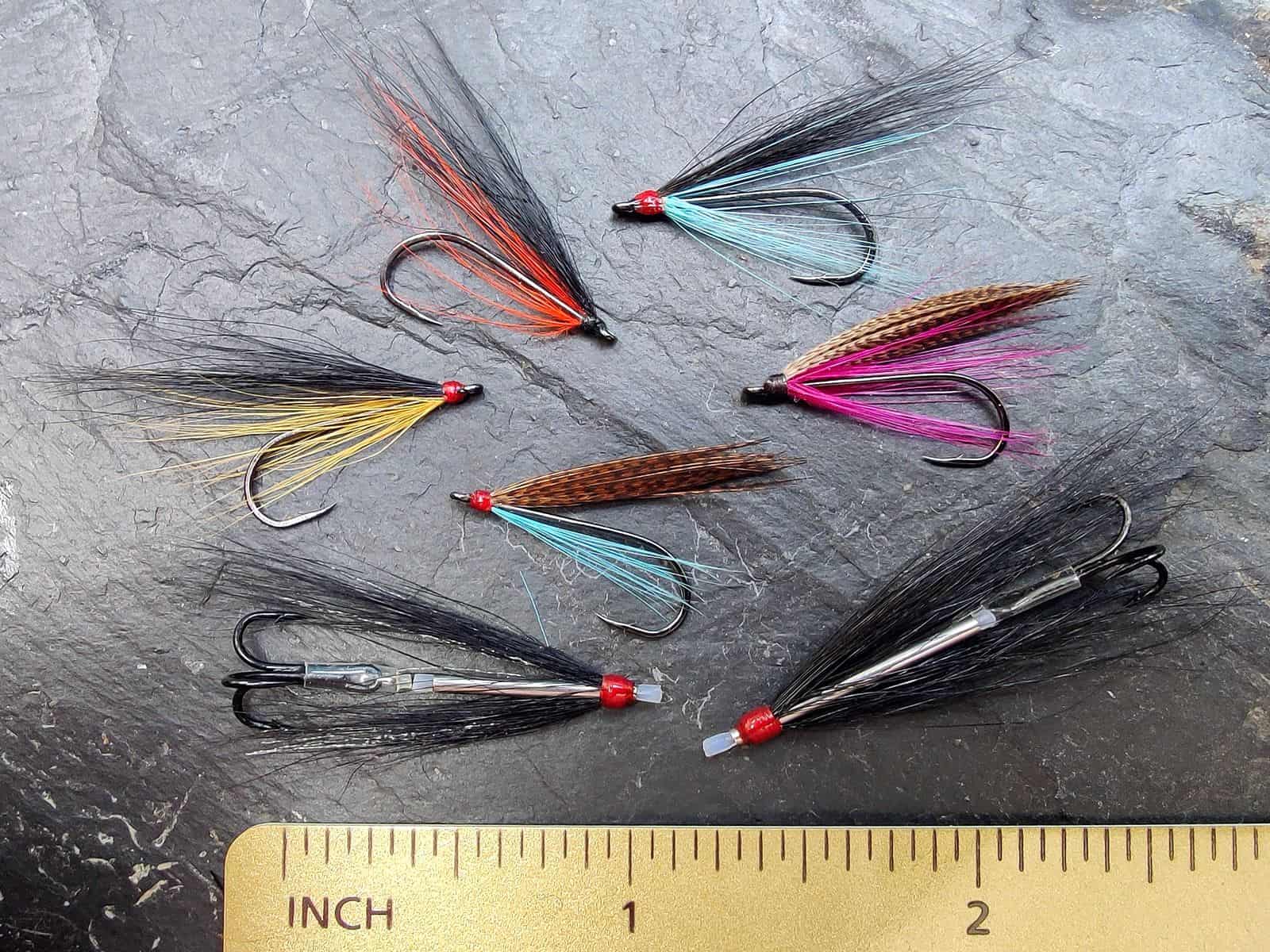
Simple Sea Trout Singles
Modern Sea Trout Flies
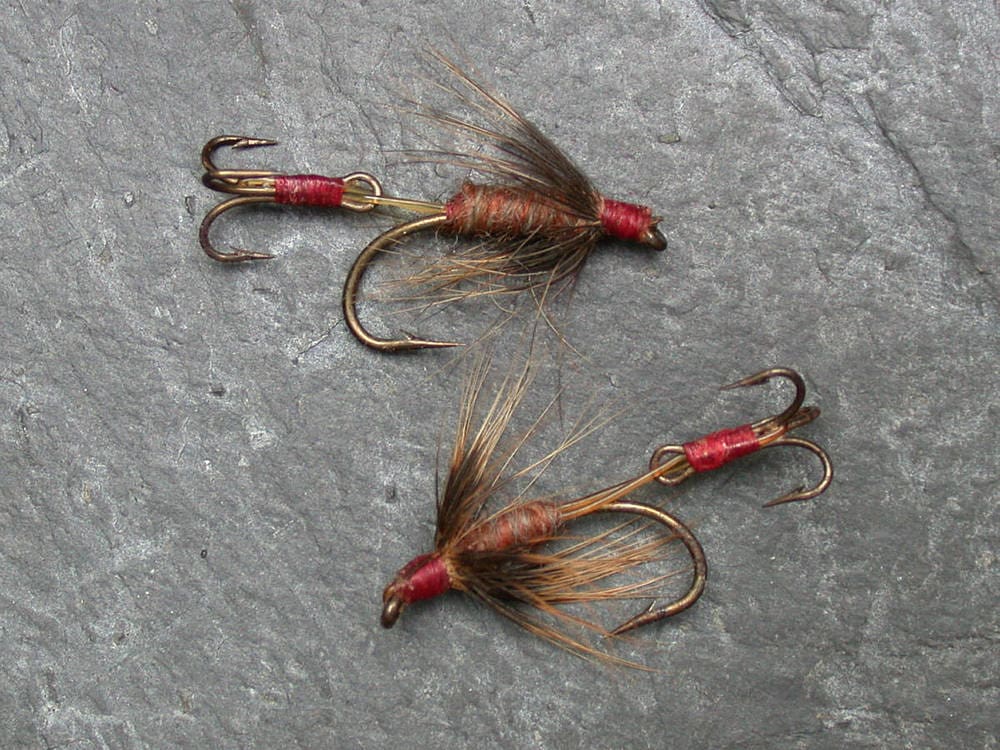
As the century progressed, increasing numbers of fishermen took to sea trout fishing, many specialising in night fly fishing through the all-too-short summer nights. Sea trout flies evolved, new fly patterns and designs appeared, each for its own purpose or river. As early as 1948, Bluett listed a selection of specialist sea trout flies, some devised by him for night fishing on the Tavy. In addition to tried and trusted patterns such as the Butcher and Mallard and Claret, these included General Eagle’s Fairy, the Martyr, Magpie, Bluett’s Fancy, the Owl and others. To these he added two lures: the Tavy Lure, tied in tandem on two connected single hooks and the Alexandra Lure, dressed on three connected singles. For the most part, his flies were tied short, with no tails and with wings extending no further than the bend of the hook, a departure from the traditional patterns. Bluett’s view was that “these patterns can be relied upon to kill fish in varying conditions of water and weather in rivers of the Tavy type”. All the while, new sea trout flies and tactics were evolving on other rivers along similar lines, e.g. the tandem “Terror” lures as used as early as the 1930s on the Ythan estuary in north east Scotland, while Wales’s rich sea trout tradition has produced many renowned fly patterns. Among the most popular and effective of sea trout flies used in modern times is the Silver Stoat, a Stoat’s Tail dressed with a silver body, dyed black squirrel tail often being substituted for the stoat.
Modern Sea Trout Singles for Night Fishing
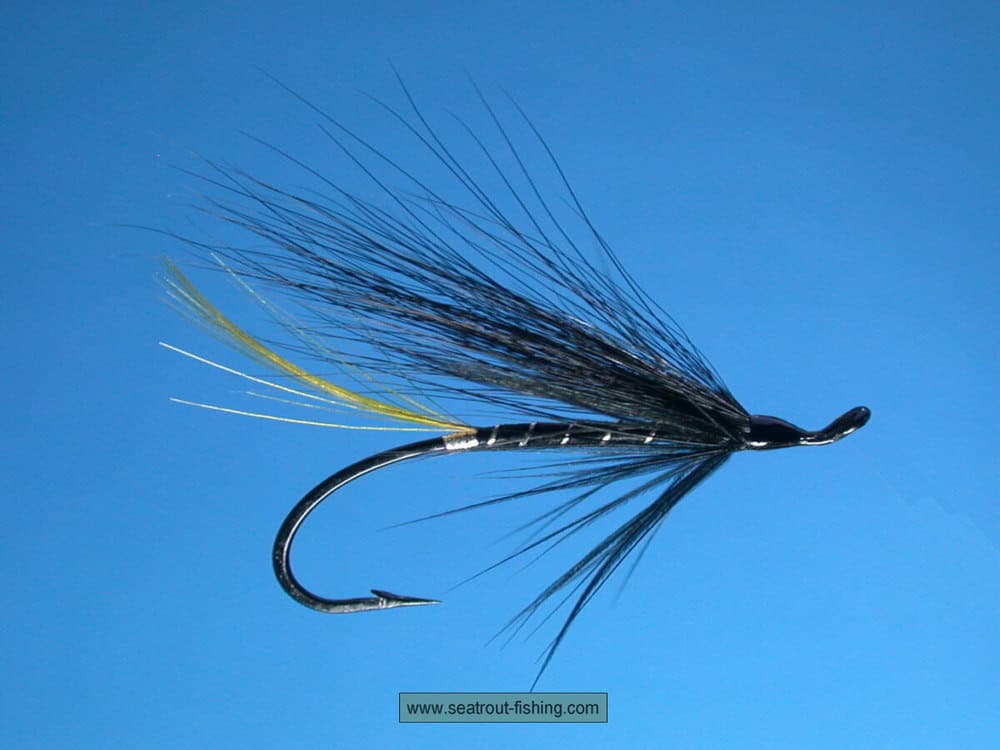
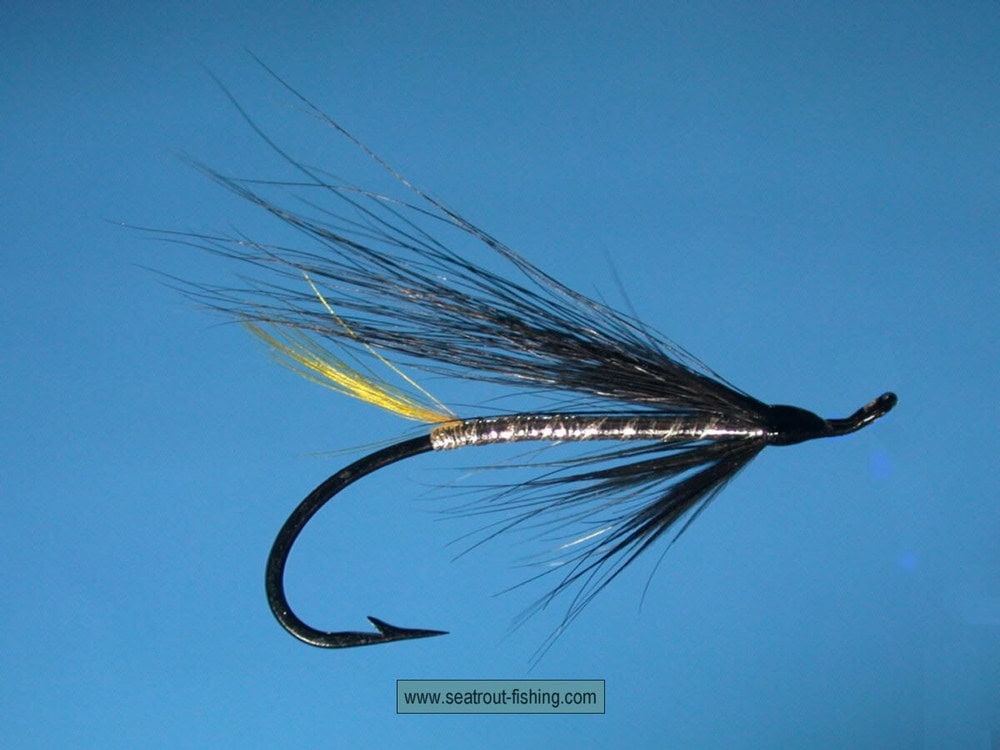
In the words of Hugh Falkus, “Of all hair-wing salmon flies for late spring and summer fishing with floating line, the simple Stoat’s Tail is one of the best we have.” This fly has been around for a long time and has in all probability accounted for more salmon than any other fly, particularly if we take into account its many variants. Some have an orange hackle, as in the Thunder Stoat and Stinchar Stoat; some a touch of blue, as in the Sweep; Others sport a tinsel body, as in the Silver Stoat and Black Brahan. All can be relied on in a wide variety of conditions and most salmon fly boxes would contain one or two variants, according to preference and experience.
Derived from the Stoat’s Tail salmon fly, this silver-bodied version, the Silver Stoat, has become one of the most popular of all sea trout night flies in use today throughout the British Isles. It is fished on floating and sinking lines. It can be tied on singles, doubles or trebles and as tube-flies, Waddingtons, snakes or needles. In the larger sizes, the hair from a squirrel’s tail, dyed black, often replaces the hair of the stoat. The plain black hackle may give way to brighter colours of red, orange, yellow or blue, each fisherman with his preferred variant. All are successful. A truly great sea trout fly.
The Impact of Falkus
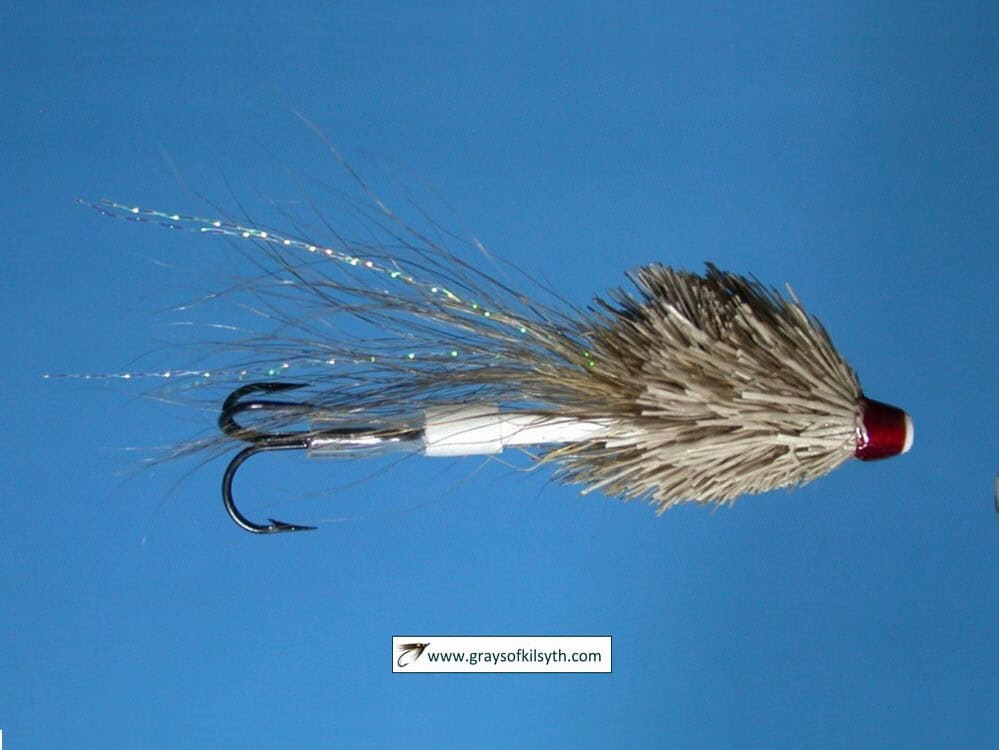
Although much of what Falkus wrote in 1962 drew on the earlier writing of Bluett and others, he brought a freshness and structure, a strategy to the whole business of night sea trout fishing, breaking a night’s fishing into stages, each with its own tactics and flies, varying with the changing conditions and behaviour of the sea trout. His knowledge and extensive experience, gained over many nights on his beloved Cumbrian Esk, allied to his undeniable talent as a writer, caught the public imagination, and inspired many trout and salmon fishers to embark on this exciting new branch of fly fishing. He introduced a range of sea trout flies and lures, each designed to meet certain conditions during the course of a night’s sea trout fishing. They included the Medicine, the Secret Weapon, the Sunk Lure and the Surface Lure. These have since been adopted, in various forms, as a basic starting point around which to built a selection of flies for night sea trout fishing throughout the summer season. With the exception of the secret weapon, now largely redundant given the decline in the use of maggots, which are now banned on most sea trout rivers, these flies/lures, or others designed for the same job, will be found in most sea trout fly boxes. There will be the single hooked flies, in varying sizes up to about size 4. Anything longer will often now be dressed on tubes, needles, wire shanks or as variants of the sunk lure, often employing a body of nylon monofilament or braid with a treble hook at the tail end, as in the snake lure. The surface or wake lure, in its various forms, often features prominently, on some rivers more than others. The cork and balsa of Falkus’s time are often now replaced with foam or deer hair in their construction to create a range of floating lures, from the simple Muddler Minnow through to larger lures often employing a trailing treble hook, such as the Jambo.
The Sea Trout Flies of Wales
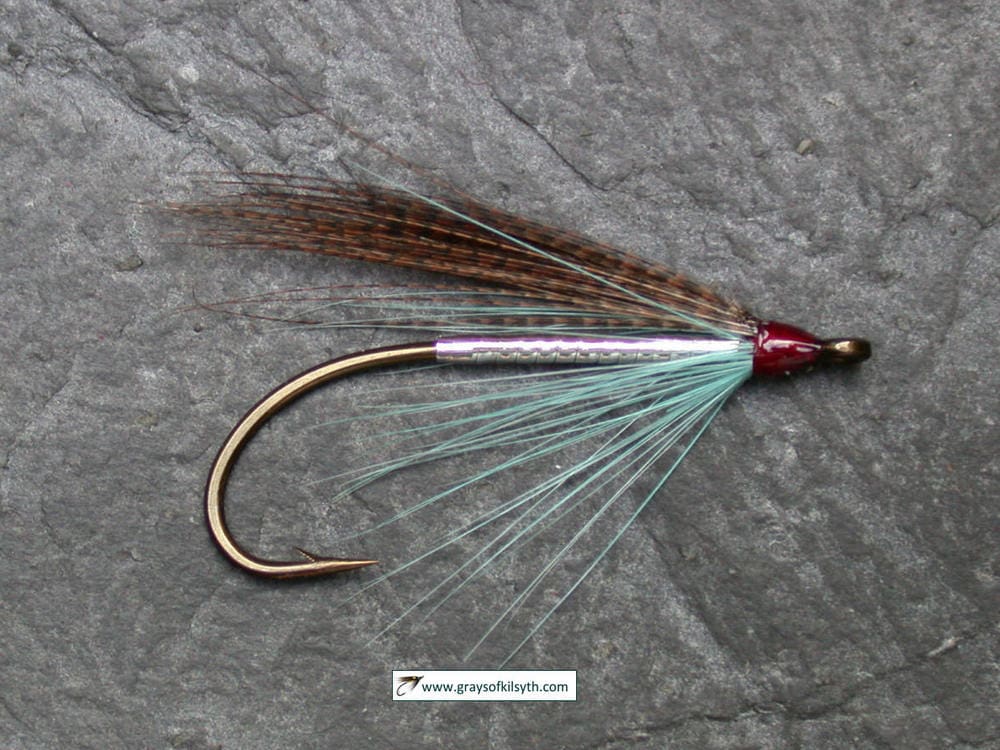
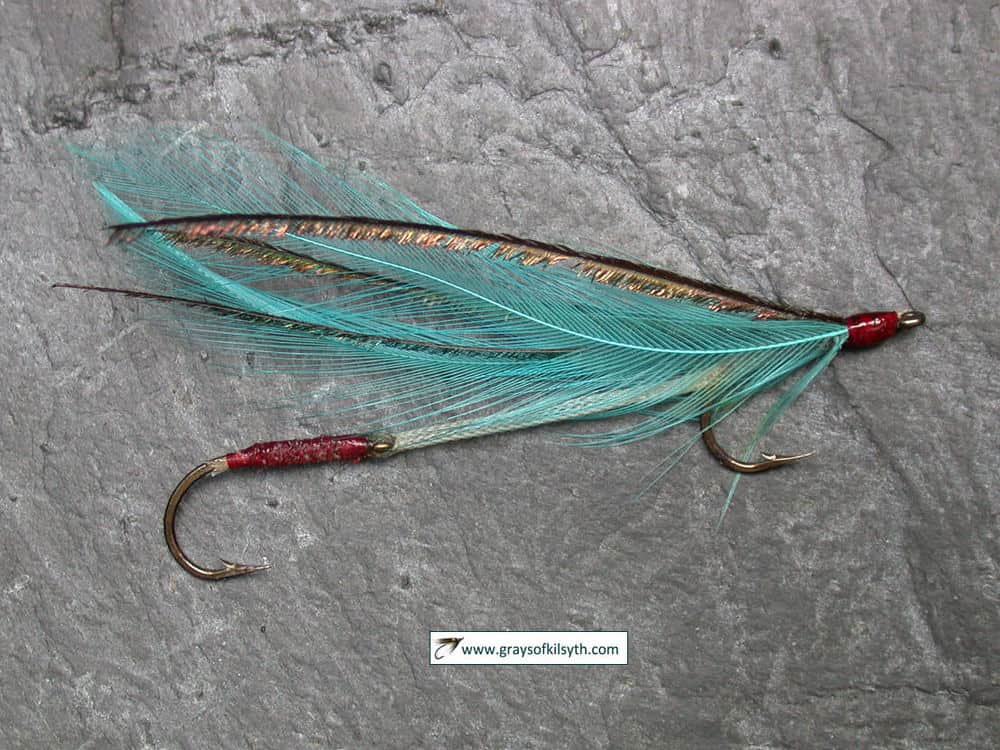
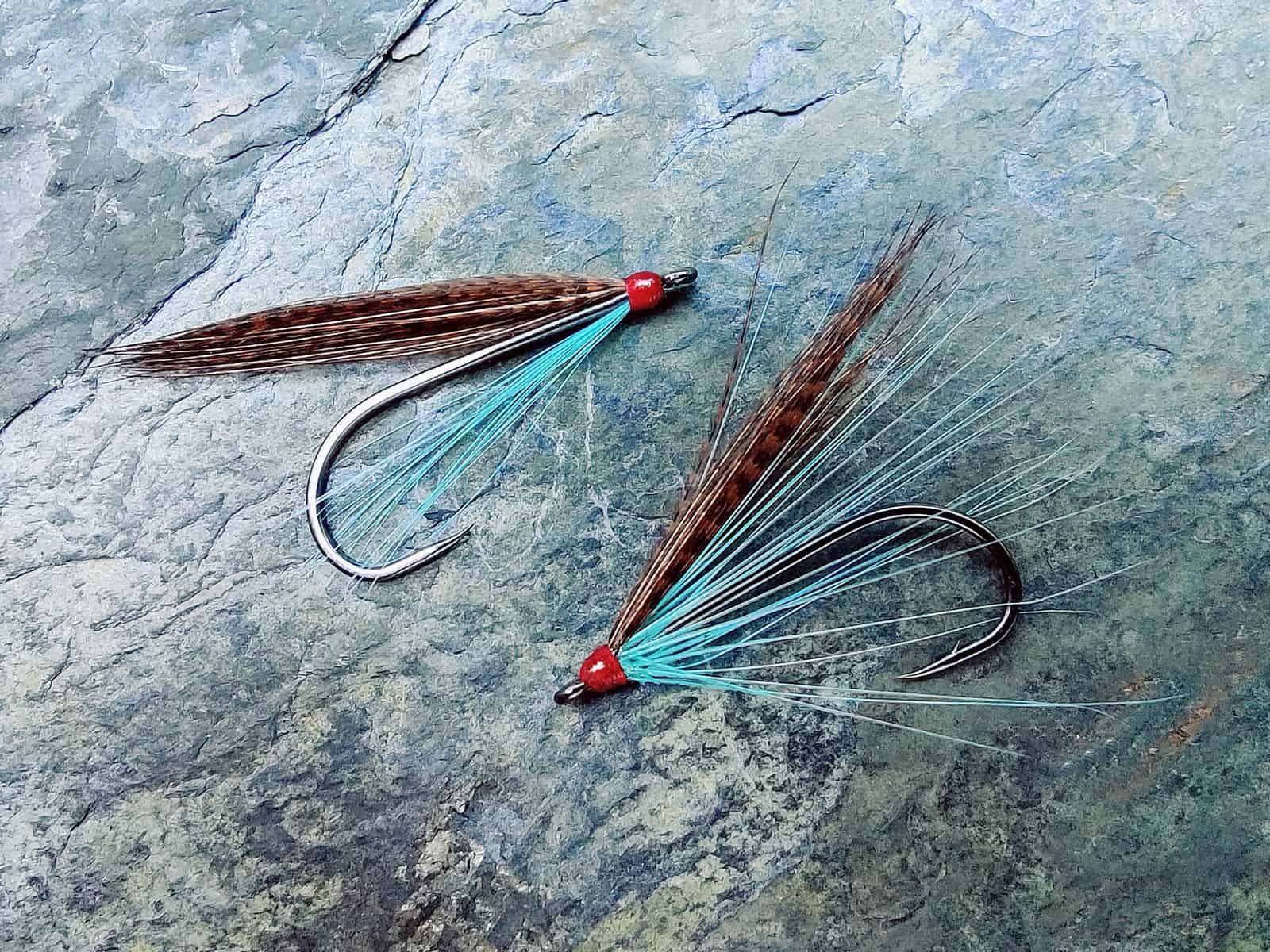
Sea trout, or sewin, fishing vies with rugby as the Welsh national sport and has produced many a famous sea trout fly. Rivers such as the Towy, Teifi, Dovey and Conway have seen a multitude of sea trout patterns devised for use on their particular river, many as popular today as they ever were. Many famous sea trout patterns emerged, some for use, like the traditional Scottish patterns, primarily during the daytime. These include the Dai Ben, Harry Tom, Tywi Topper, Teifi Terror and Conway Silver, many illustrated in “Successful Sea Trout Angling” by Graeme Harris and Moc Morgan, first published in 1989. A great many patterns were devised for general night fishing on the rivers of Wales, sub surface lures dressed on single hooks most commonly in sizes 10 to 4, predominantly with squirrel hair wings, either natural grey or dyed black, with bodies of silver tinsel or black floss with a silver ribbing. This kind of fly was, and still is, among the most used, and most effective, of our sea trout flies. Welsh flies of note include the Haslam, Dovey Black and Orange, Conway Red and Moc’s Cert. Mention might also be made of the “Marchog” or “Knight” series of lures, large lures dressed on size 2 main hook, and incorporating a flying treble to enhance hooking capability, especially when the sea trout are “coming short”. More recently, John Graham’s Jambo lure has gained widespread favour and something of a reputation as a wake lure while, today, many talented and innovative Welsh sewin fishers continue to create new designs and patterns, combining the best of the old and the new.
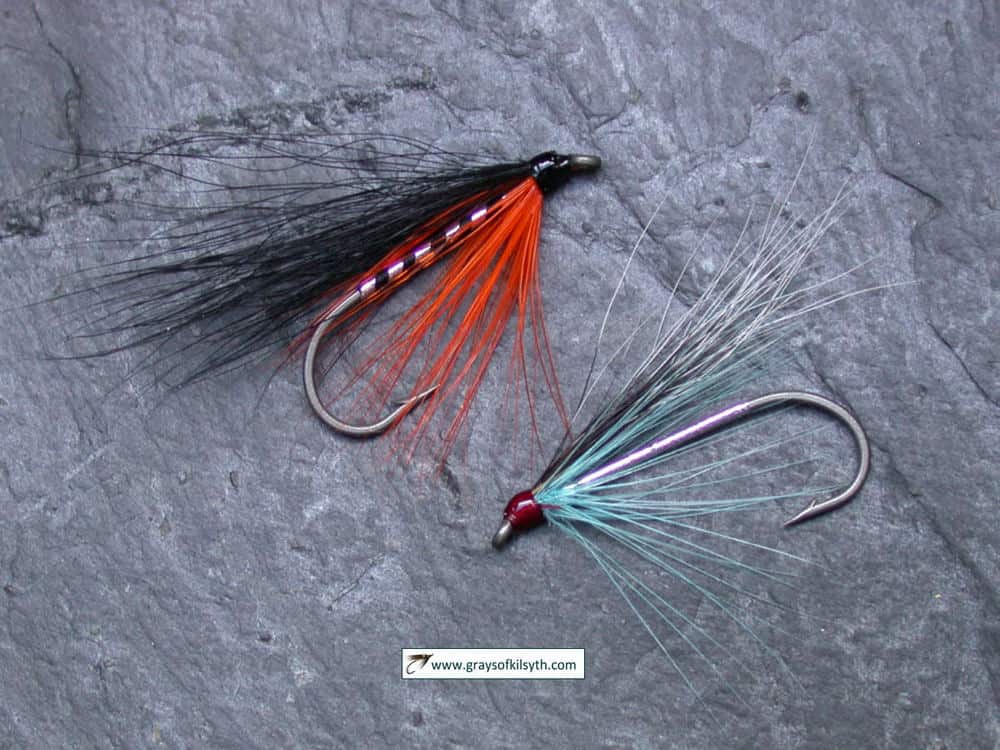
Sea Trout Tube Flies
Tube flies have gained a fair degree of momentum in recent years, not only for sea trout fishing but for salmon, steelhead and other predatory species, both in fresh and saltwater. The tube fly has, of course, been around in various forms for a long time and has been put to good use in a variety of situations, whether for early spring salmon fishing, where the weight of a long heavy copper slipstream tube helped to get the fly down in high, cold water; for low water summer salmon, where a light mobile fly dressed on short plastic tube was the order of the day; or for late night summer sea trout fishing, where a long sparsely dressed aluminium tube might be required to search the depths of a sea trout pool. Slow sinking plastic tubes have also found their uses in sea trout night fishing where they might be fished at varying speeds in or just under the surface on mild nights when the sea trout were up and active, or allowed so sink slowly on an intermediate line to search out the deep lying sea trout when things have gone quiet late on a summer’s night.
Needle Tube Flies
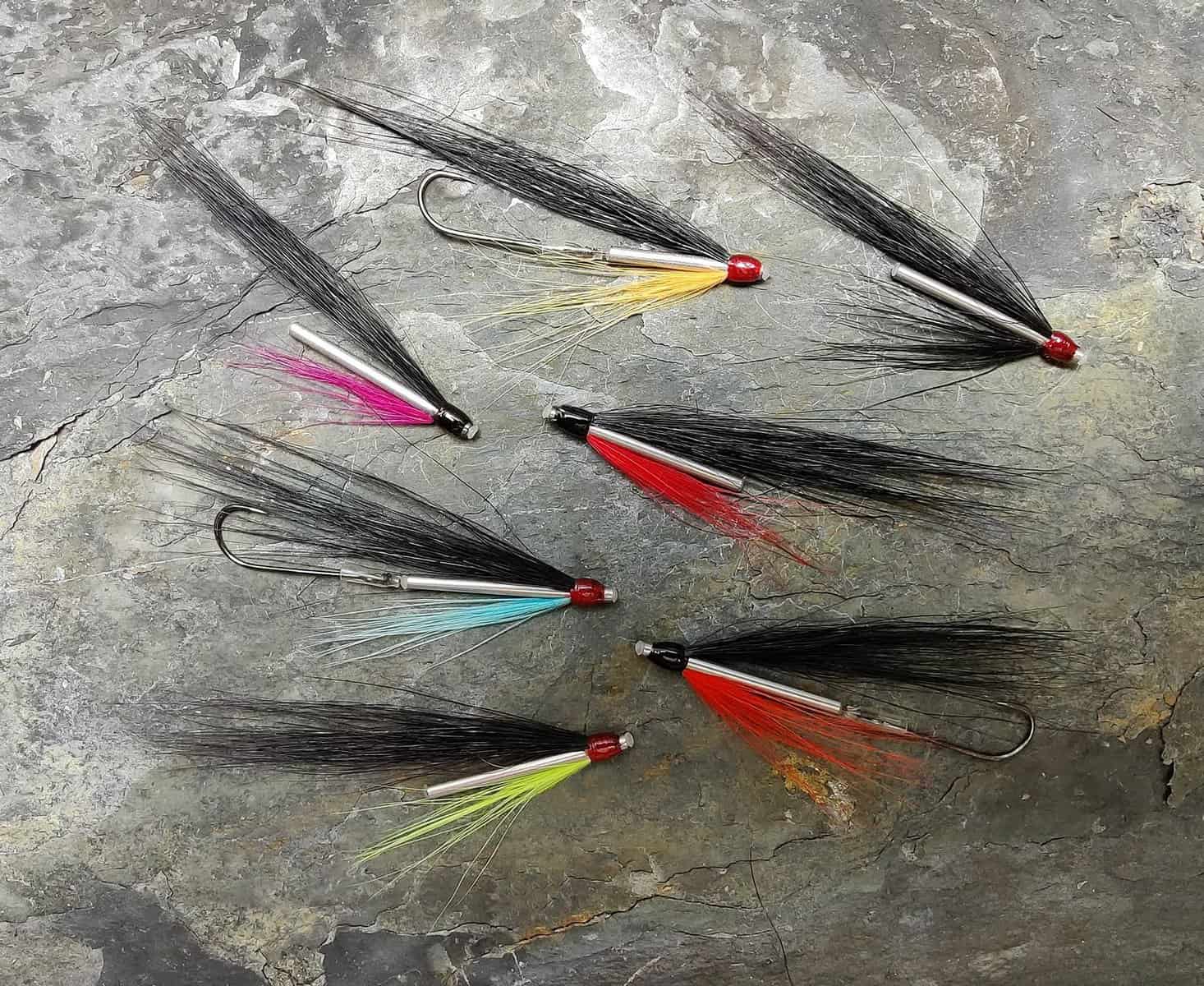
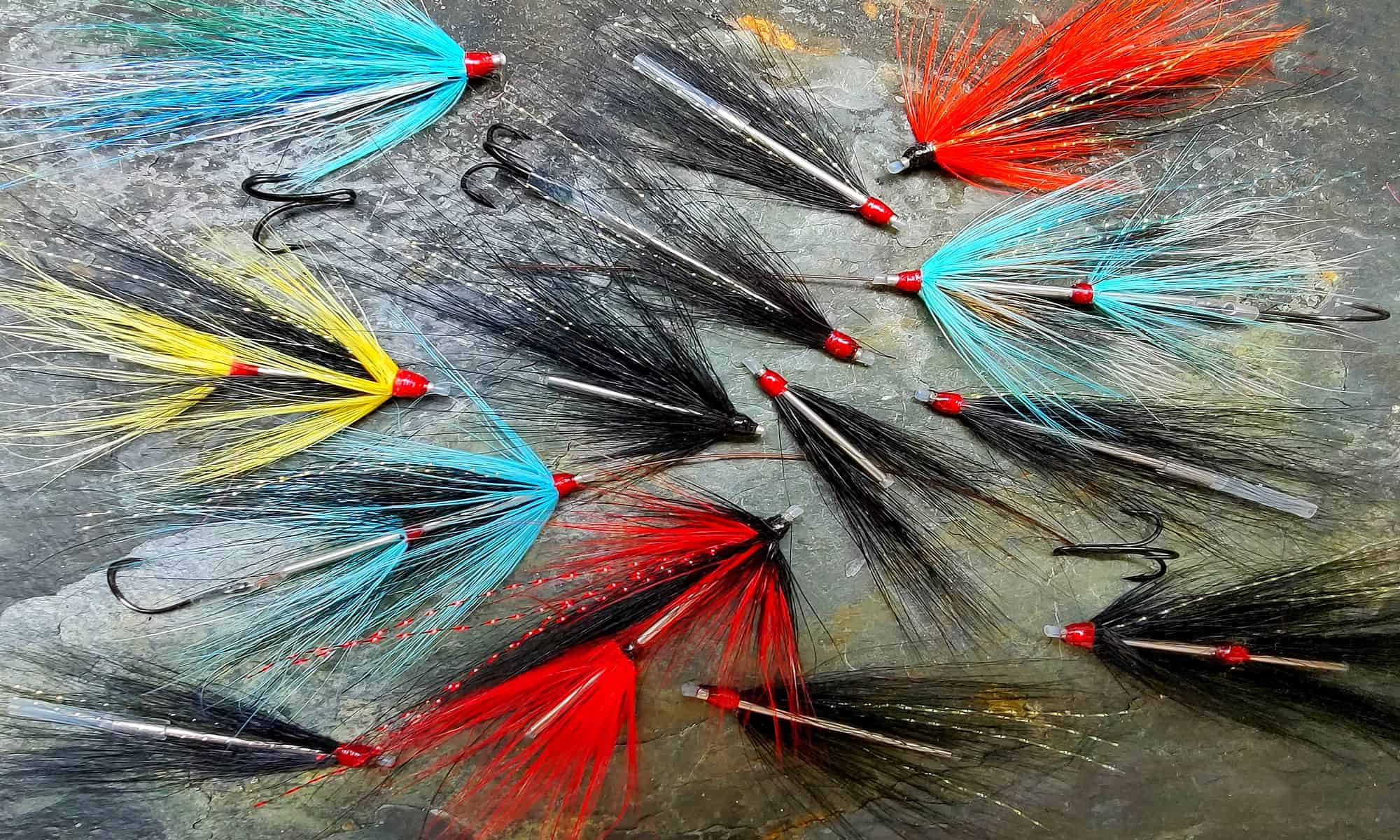
I have always like very simple slim flies for sea trout night fishing. Following on from the Needle Fly, the slimmest of all lures, devised in the late nineteen nineties for late night fishing on the River Earn, the stainless steel Needle Tube was introduced by Grays of Kilsyth in 2008. With a diameter of only 1.5mm, in lengths from 10mm to 40mm, the Needle Tube is the slimmest plastic-lined metal tube currently available to the fly tyer, allowing the dressing of very slim lures for late night sea trout fishing, and for salmon and steelhead fishing too. One great benefit of the stainless steel needle tube is that it requires no body dressing, making it very easy to dress. A sparse dressing of hair, with an optional strand or two of Krystal Flash, over the bare silver body is all that is needed to create a very effective lure for night fly fishing.
Tube Flies with Free Swinging Hooks
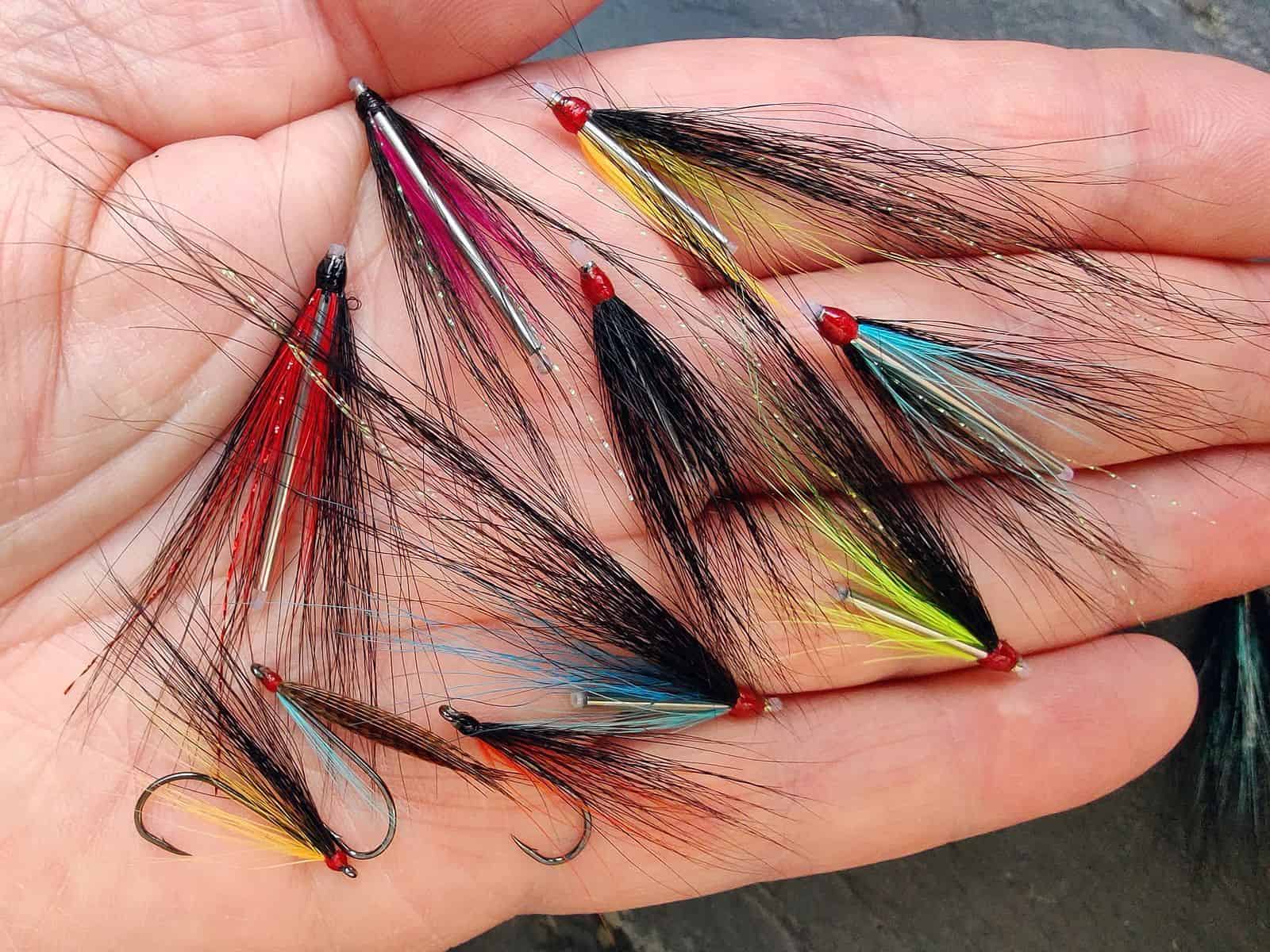
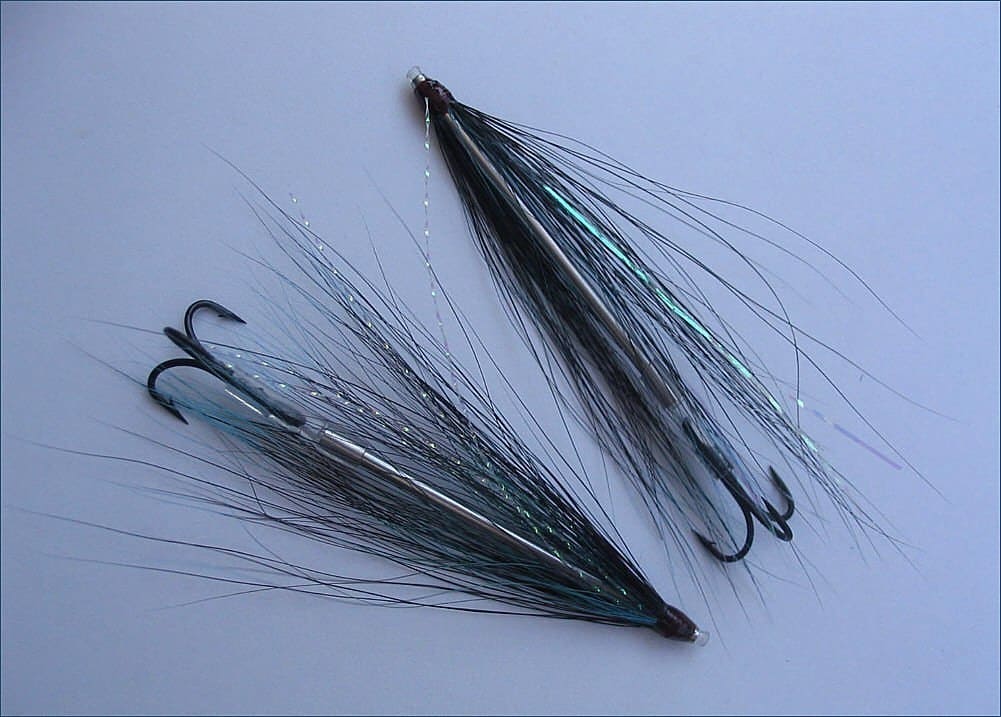
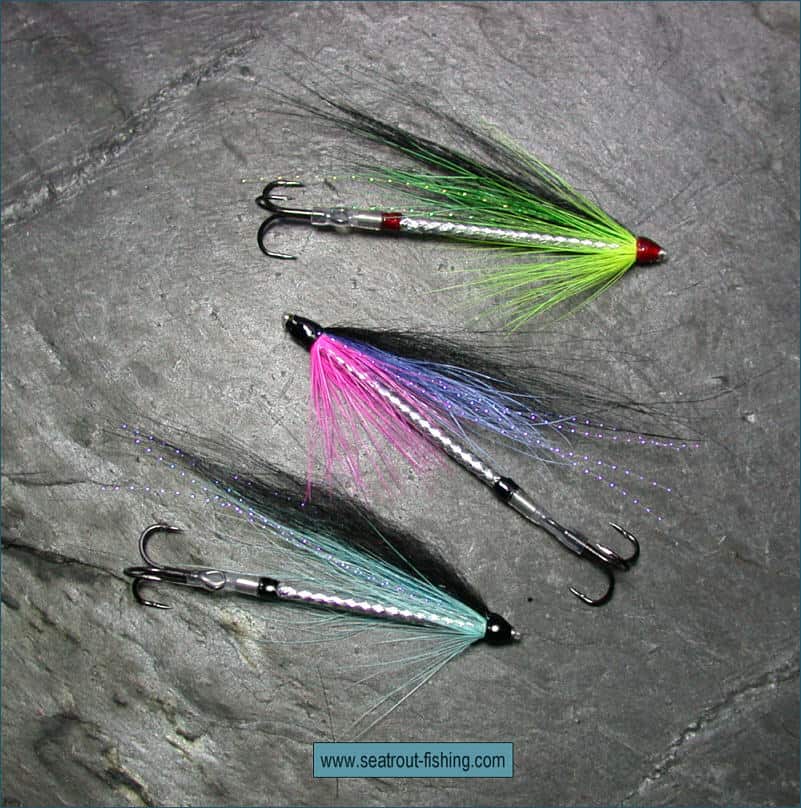
On mild summer nights, with the river running low and clear, small flies, dressed on single hooks of size 10 or 8, might be fished successfully in the early part of the night, occasionally throughout the night if temperatures remain in double figures. Often, though, as the night progresses and darkness deepens, sea trout activity may tail off. After midnight, things may go quiet as temperatures fall. Time perhaps for a change of fly, to something a little bigger. Flies up to about an inch long, the kind of flies we might begin the night with, are best dressed on single hooks, some of which are shown above. Longer flies, in lengths up to about an inch and a half, can, of course, be dressed on single hooks, perhaps on long shank fine wire singles up to about size 4. Anything much longer has traditionally been dressed on tubes or wire shanks, or as snake lures. For my own fishing, rather than dress flies on large single hooks, in the late nineties I first devised the Needle Fly, a long slim lightweight lure dressed very simply on sewing (sewin!) needles. Following the success of the Needle Fly over the next decade, I then turned my attention to the development of very fine, ultra-slim stainless steel needle tubes, the kind used in the manufacture of hypodermic needles. Slim lures, sparsely dressed on these tubes, are now my preferred option for late night sea trout, when the smaller flies have lost their attraction.
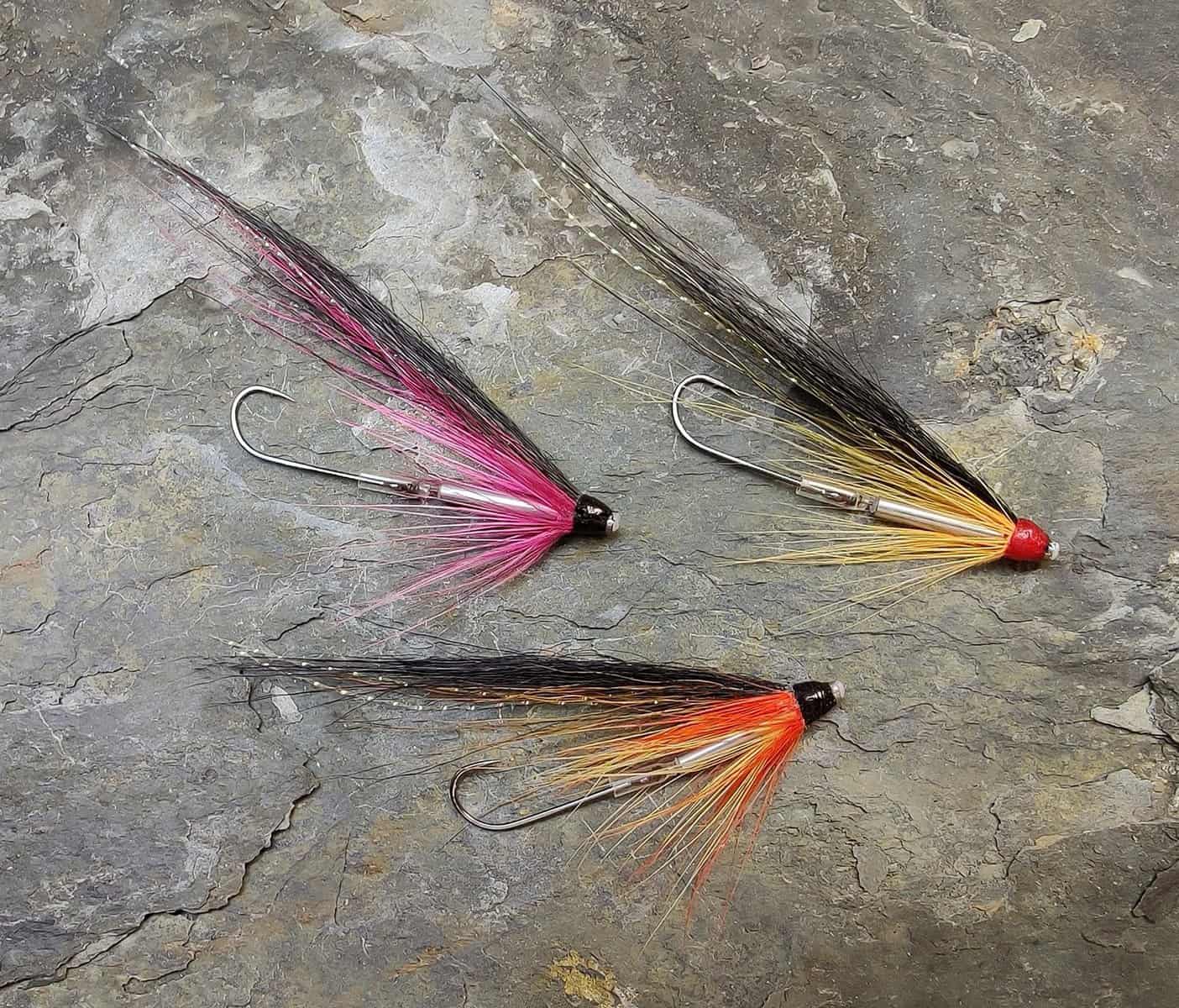
Shown above is a small selection of fine stainless steel needle tube flies (dressed on 15mm long tubes, 1.5mm or 1.8mm outside diameter), which may be matched to single, double or treble hooks. The hooks may be attached in the conventional way using silicone extension tubing or they may be allowed to swing freely as shown, the knot being protected by a heat-shrink knot guard which are very easy to make at home. Needle tube flies were originally devised with sea trout night fishing in mind but have since proved equally effective for salmon, the size and colour chosen according to circumstances. The hook may also be selected in line with conditions, regulation and personal preference, be it single, double, treble, barbed or barbless. The hook might be fixed at the rear of the tube fly by means of a flexible tube, or allowed to swing freely as in the above examples. If allowing the hook to swing freely behind the tube fly, the eye of the hook and the knot should be protected by a knot protector or knot guard, sometimes referred to as a swing tube. The knot guards shown here are made from extremely fine clear heat-shrink tubing (with a starting internal diameter of 1.2mm). For instructions on how to make a heat shrink swing tube or knot guard, see Tube Fly Hooks
Sea Trout Intruders
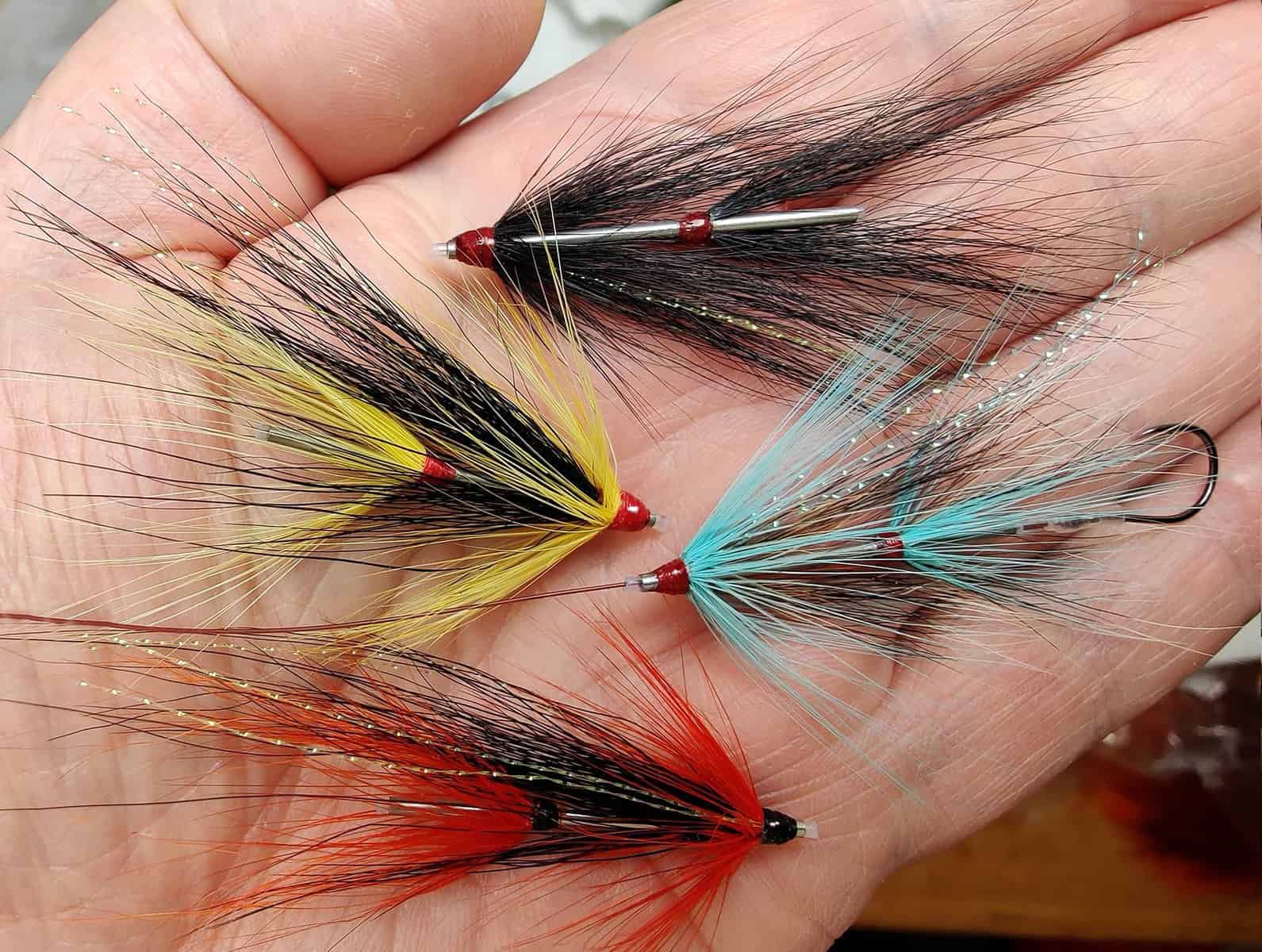
Intruders originated on the rivers of the Pacific North West as large but reasonably lightweight lures for Pacific salmon and steelhead. The idea might be adapted successfully for sea trout night flies. Tubes are now commonly used in the tying of Intruder Fly Patterns, making for a more practical and more easily dressed lure than those dressed on Waddington shanks. Shown below is a handful of sea trout intruders, dressed on slim stainless steel needle tubes, intended for night time fly fishing.
For more on Sea Trout Tube Flies, see FLY TYING